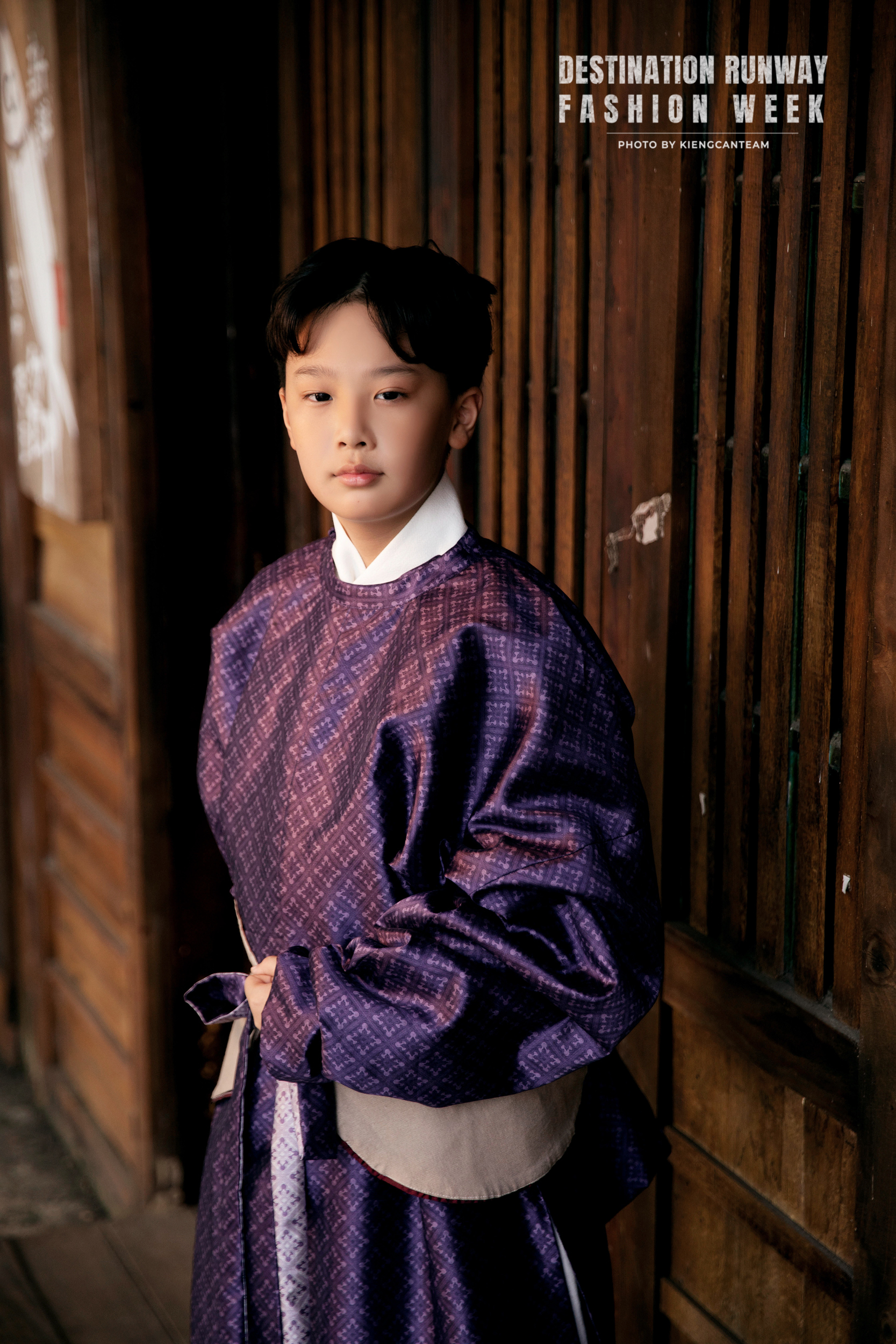
Trước thời thuộc Minh, bên cạnh lối búi tóc ở sau gáy, nam nhân nước ta còn để tóc ngắn và rẽ ngôi, đặc biệt là trẻ em chưa đến tuổi làm lễ đội mũ.
Vào thời Lý, nhà vua cho tuyển chọn nam thiếu nhi có dung mạo đẹp đẽ, hát hay múa khéo, được huấn luyện các môn “Lục nghệ” (lễ, nhạc, bắn cung, cưỡi ngựa và điều khiển xe ngựa, thư pháp, số học)và luôn theo hầu cận bậc cửu ngũ chí tôn, được gọi là “Thượng Lâm đệ tử”.
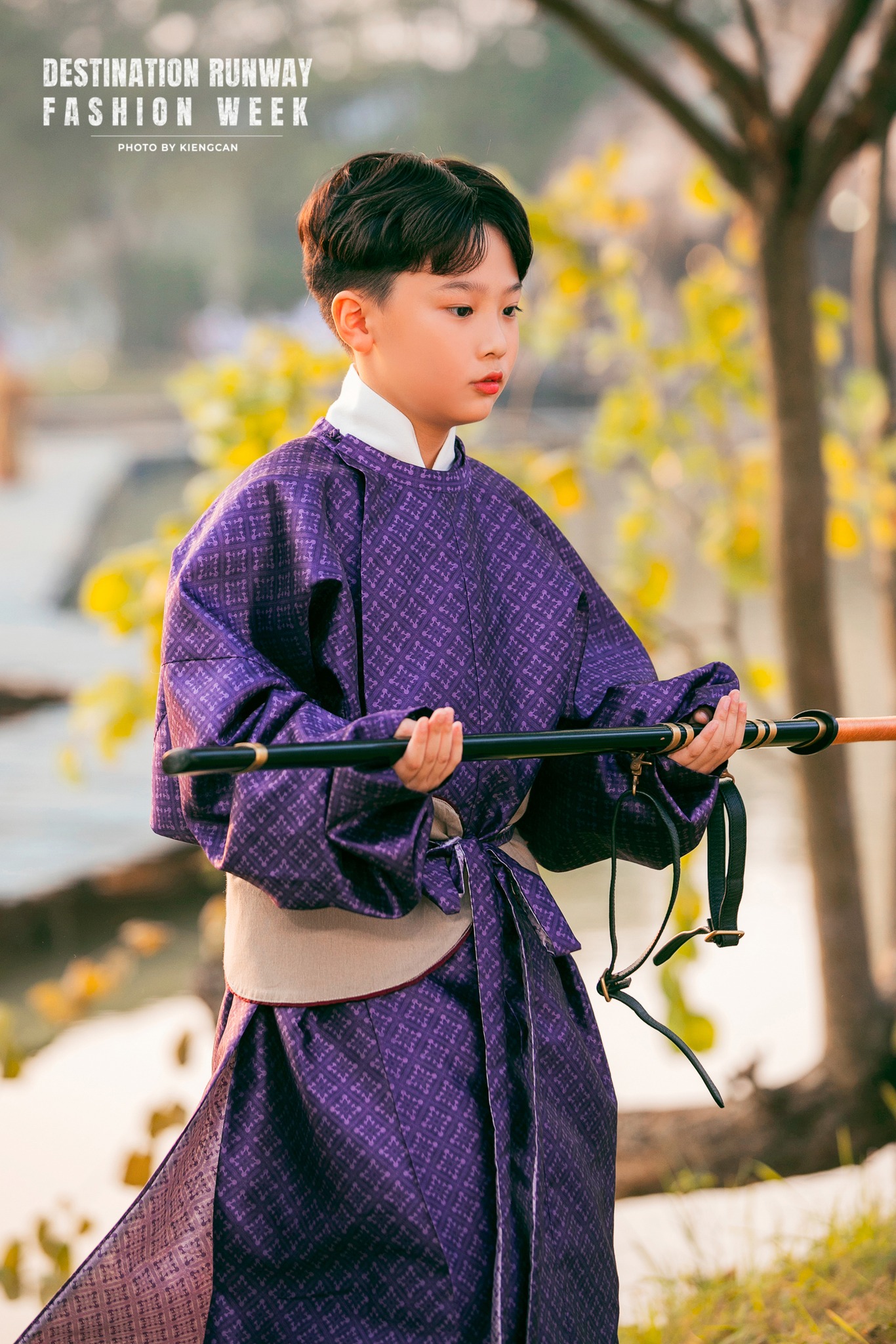
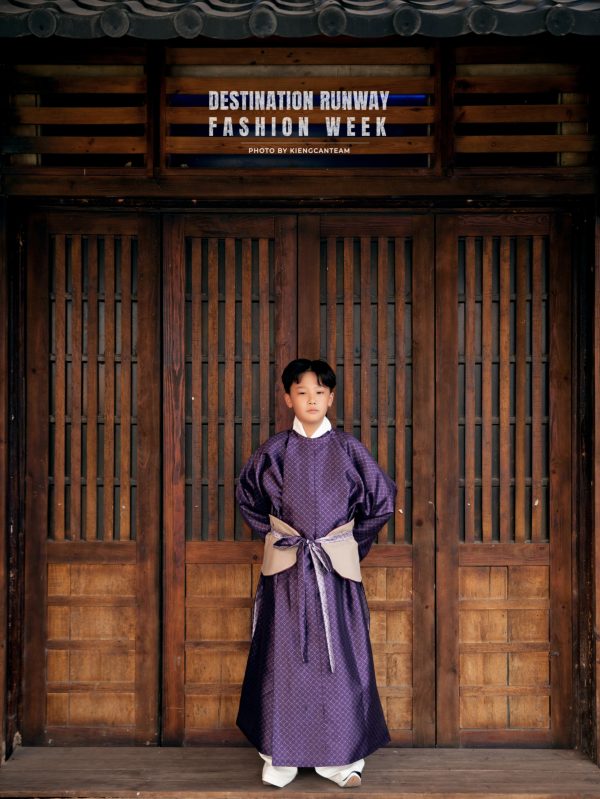
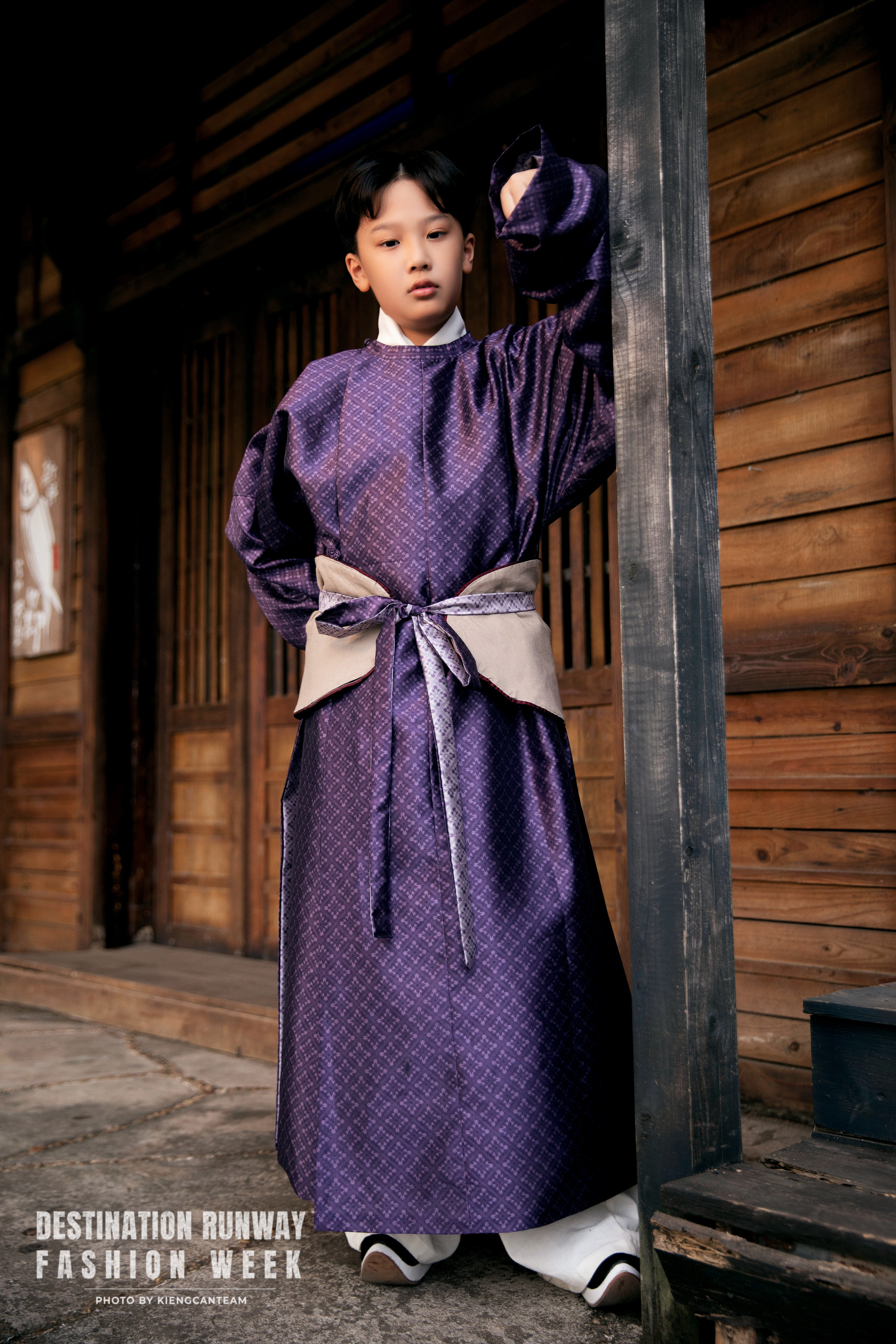
Bộ trang phục trên đây mô phỏng lại trang phục của đội nam nhi hầu cận của Hoàng đế nhà Lý, bao gồm áo trực lĩnh lót trong, bào viên lĩnh địa khâm tay hẹp, hông đeo nịt bụng, quấn thường ngắn mặc quần ống để tiện lợi cho các hoạt động thường nhật.
Casual round-collar robe of the “Shanglin Disciples”
Before being dominated by the Ming dynasty invaders, apart from the bun at the nape of the neck, men of Dai Viet also kept their hair short and parted, especially children who were yet to receive the Confucin coming of age ceremony.
During the Ly dynasty, the emperors selected bonnie younglings who were skilful at dancing and singing, and they shall be trained in the “Six Arts” (ceremonies, music, archery, chariotry and equestrianism, calligraphy, and mathematics) and they would become close-by servants of the monarch, called “Shang Lam disciple”.
The outfit above simulates the costumes of the boy attendants of the Ly Emperors, including a cross-collar robe worn underneath, narrow-sleeve round-collar robe, waist belts, short skirt-like garnment and trousers for the convenience of daily activities.
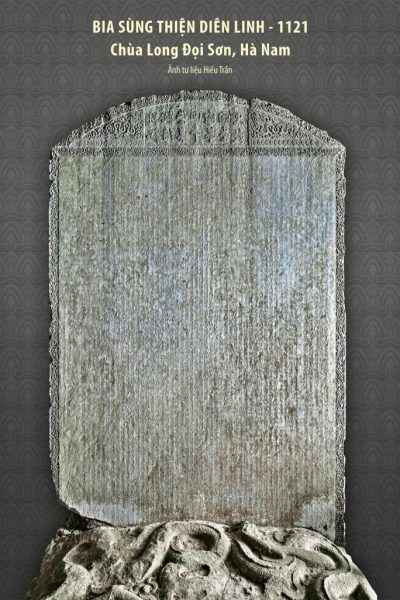
Bia “Sùng Thiện Diên Linh” (1121) với bài minh văn ghi nhận sự tồn tại của Thượng Lâm đệ tử dưới triều vua Lý Nhân Tông (1072-1128).
“Sùng Thiện Diên Linh” Stele (1121), whose inscription confirms the existence of Shanglin Disciples during the reign of Emperor Lý Nhân Tông (1072-1128).